Traffic Calming and Pedestrian Safety
 In South Africa approximately 35% of all road fatalities are pedestrian fatalities. We have shared information on the Arrive Alive road safety website with our pedestrians on how to avoid becoming road crash fatalities. These include the need for increased visibility around traffic, the need for alertness etc.
 - Vehicle / Pedestrian Conflict
- Pedestrians sharing roadway with vehicles
- At grade facilities (grade separated ideal)
- At grade : angle at which pedestrians use road (Parallel, cross skew, at right angles)
- Pedestrian behaviour is often unpredictable
- Children
- Adults
- Disabled
- Aged
| Concept | Responsible entity |
| Engineering | Roads authority |
| Education | Teachers and parents |
| Enforcement | Metropolitan Police |

- Junctions (Intersections)
- Midblock
- Public Transport Facilities
- Schools / Other high pedestrian volume areas
- Essential with any engineering intervention
- Focus on different age groups
- Children 6 – 12 years
- Children over 12 years
- Adults
- Use text road signs to educate
- “Responsible Pedestrian” licence?
- Sometimes only solution
- Not aggressively enough at present
- Pilot projects where pedestrians cross highways
- Training of community traffic wardens
- Painted or raised and painted edestrian crossings
- Speed humps
- Mini-circles
- Sidewalks
- Road signs
- Taxi lay-byes
- Median islands
- Road marks
- Illumination
- Barriers and kerbs
- Loading facilities at schools
- Traffic signals
- Scholar patrols
- COSBI Strips
- Rumble strips (mainly in rural areas)
- Have a traffic calming policy in place (ratified by Council)
- Have a Traffic calming Master Plan for whole or part of the town or city
- Have an approved evaluation process (should be part of policy)
- Have a public awareness / education process in place
- There should be an awareness amongst officials that a policy and technical criteria exist
- Have a recording and feedback system in place
- Identify road safety problems before they occur
- Study the area in terms of:
- Road hierarchy
- Traffic Volumes (vehicles and pedestrians)
- Determine number of residential units
- Land use (Schools, commercial developments, old age home etc)
- Road geometry (vertical and horizontal alignments, cross sections etc)

- There are basically six different methods used to calm traffic (both volumes and speeds)
- Vertical displacement (speed humps)
- Horizontal displacement (mini-circles)
- Lane width reduction (eg choker)
- Auditory methods (rumble strips)
- Visual methods (Cosbi strips)
- Road closure
- Details of Cosbi Lines
- Layout of 3-Legged Mini-Circle
- Layout of 4-Legged Mini-Circle
- Layout of 4-Legged Mini-Circle with Painted Pedestrian Crossing
- Layout of 4-Legged Mini-Circle with Raised Pedestrian Crossing
- Mini-Circle Road Marking Details
- Details of Raised Pedestrian Crossing
- Details of Speed Hump and Road Markings
- Single-lane Choker
Van Riebeeck, Molteno - Lyttelton RPC and mini-circle
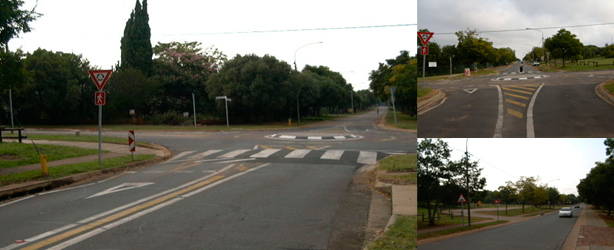
Van Riebeeck, Molteno - Lyttelton Placement of circle, signage
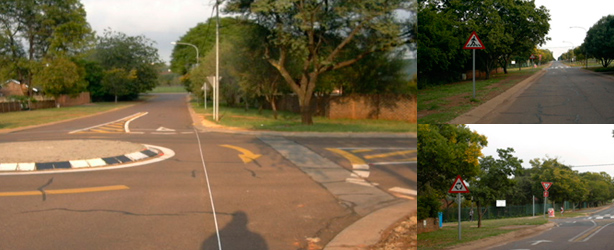
Kruger Ave, Lyttelton Choker, stormwater channel
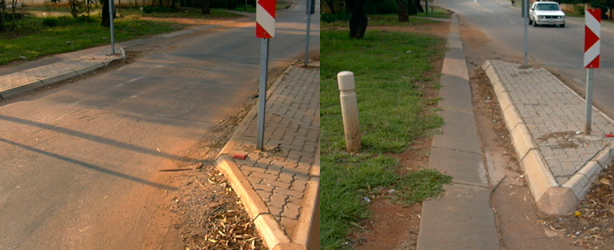
Chokers - Lyttelton
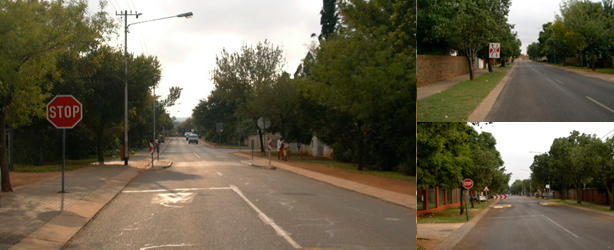
River Road and Service road - Lyttelton
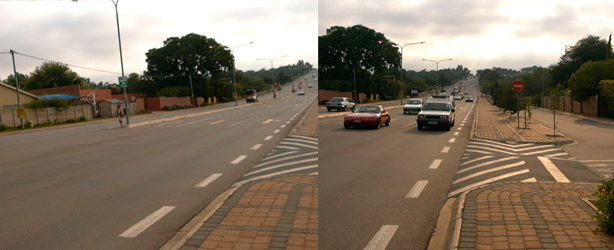
Irene Traffic calm due to reduced lane widths
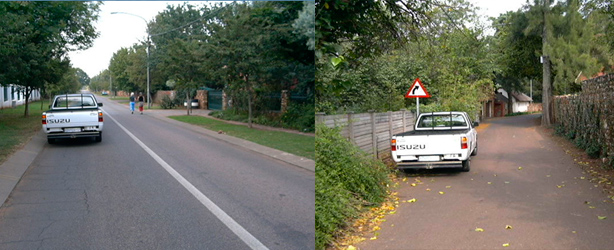
Intelligent use of Traffic Calming - Lyttelton Manor High School
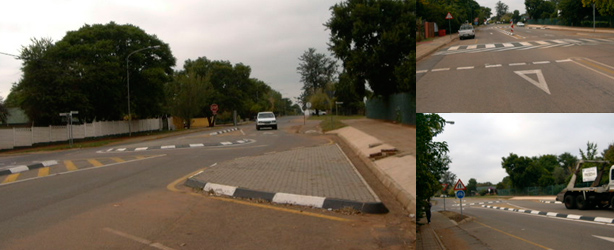
Lighting and painting of Traffic Calming Features
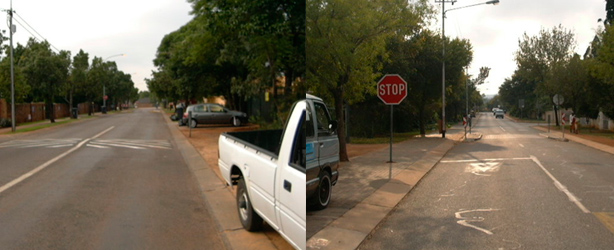
Lois Avenue 10,5m Roadway Newlands (Excessively wide lanes – has to be rectified with Traffic Calming)
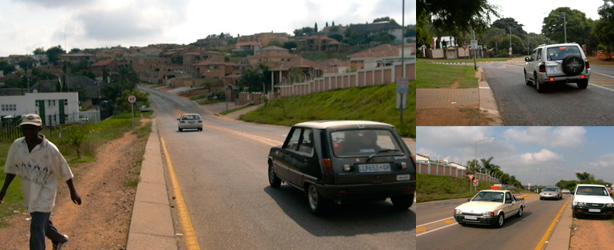
Lois Avenue Traffic Calming Newlands
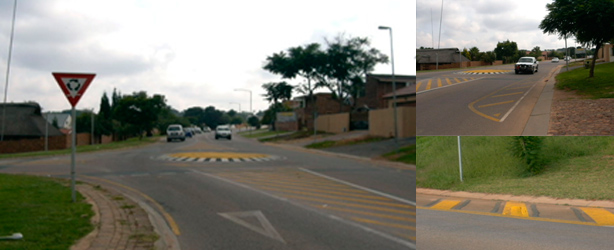
Typical Road Classes
Road Classes U1 and U2
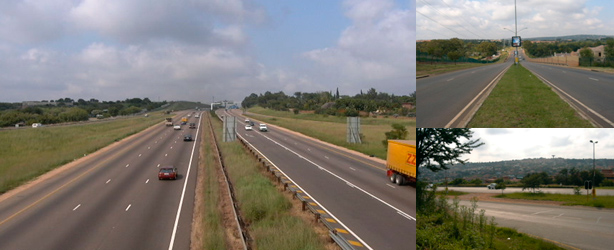
Road Classes U3 and U4
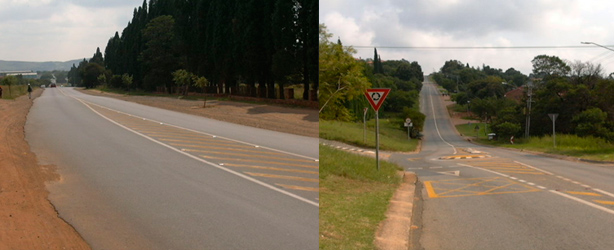
Road Class U5
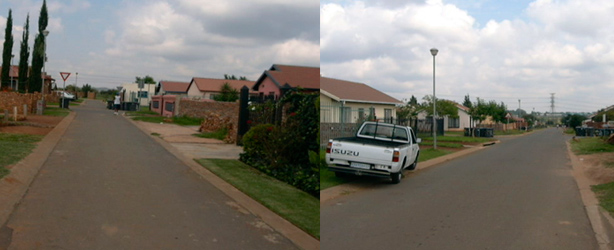
Road Class U6
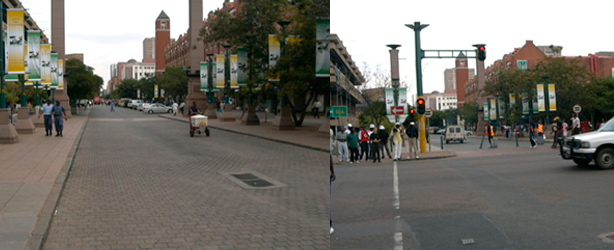
Road Class U6 - Woonerf
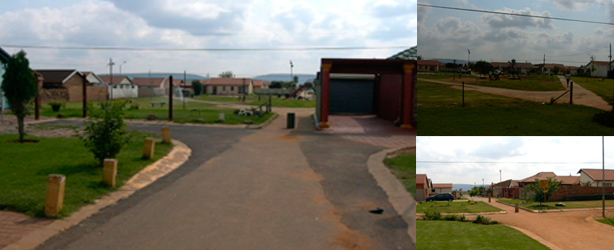
Zambesi Drive - class U2, U3, U4 and U5