Arrive Alive

Drunk Driving and Breath Testing
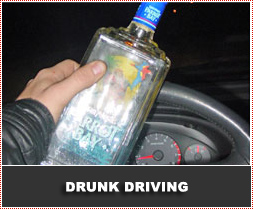
Prosecuting Guidelines for Evidentiary Breath Testing Machines ( EBTM)

1. General Guidelines for Prosecution in Drunk Driving Cases

1.1. The fact that neither a blood nor a breath sample can be obtained does not preclude a prosecution on a charge of driving under the influence, if other evidence is available. If, for example, a competent and knowledgeable officer on drunken driving cases is available as witness, his or her evidence may well suffice.

1.2. Section 37 of Act 51 of 1977 is not unconstitutional and accordingly an accused may not refuse that blood be drawn.

1.3. A traffic officer, appointed as a peace officer in terms of section 334 of the Criminal Procedure Act, 1977 (GKR. 159 Government Gazette 6295 2 February 1979, as amended) has for purposes of the CPA the same powers as a police officer.  He may therefore request a doctor or registered nurse to draw blood.

1.4. If the holder of a Professional driving permit (Prdp) is charged for driving with excess alcohol in his blood or breath, whilst driving in circumstances where a Prdp is not required, he must be prosecuted for contravention of the section as a normal driver and not a professional driver.  (After implementation of Section 65 of Act 93 of 1996).
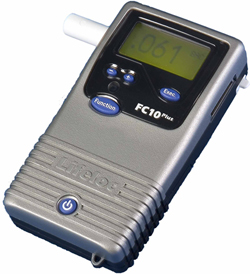
 

2. Guidelines for Prosection with Evidentiary Breath Testing Machines

2.1. The equipment may only be operated by a registered traffic officer who must have passed an operator’s course for the particular model of the machine and must be issued with an operator’s certificate of competence.

2.2. The operator must keep in his/her possession the operator’s certificate for the equipment in question or a certified copy.

2.3 Only the equipment which complies with Regulation 332 of the Regulations in terms of the National Road Traffic Act may be used. Equipment must be calibrated at least once every six months by an accredited laboratory and a calibration certificate issued.  A certified copy of the calibration certificate shall be available on site. Equipment that is outside the 6 month period must be recalibrated before it may be used for prosecution purposes.

2.4 After maintenance and repair of the equipment, it must be recalibrated.

2.5 All calibrations, maintenance and repairs shall be recorded in an appropriate equipment service record, which is kept for each unit.

[Information from Technical Committee for Standards and Procedures for Law Enforcement Equipment , November 2005]

Also visit the following sections:


Loading...

Search Road Safety Articles

Latest Pages

Post-accident Medical claims and the RAF

Post-accident Medical claims and the RAF

A serious car accident can change your life in an instant. After the initial shock, victims and their families often face emergency surgeries, long rehabilitation, lost income, and overwhelming medical bills. In South Africa, the Road Accident Fund (RAF) helps compensate innocent road accident victims

Read More

Road Accidents and Personal Accident Insurance and Benefits

Road Accidents and Personal Accident Insurance and Benefits

Navigating Your Options After a Crash A serious car accident can quickly disrupt your family’s finances. After emergency medical care, you may also have to deal with long-term recovery, lost income, or even permanent disability. Many South Africans want to know how government road accident

Read More

Operational Guide for Emergency Response to Electric Vehicle Fire

Operational Guide for Emergency Response to Electric Vehicle Fire

Foreword In the past decade, electric vehicles have evolved from a technological novelty into an everyday part of the transportation landscape. They bring important advantages-reduced emissions, quieter operation, greater efficiency-but also new operational and safety challenges. One of the most

Read More

Trucking Wellness & HIV Treatment

Trucking Wellness & HIV Treatment

Introduction Trucking Wellness (TW) is an initiative of the National Bargaining Council for the Road Freight and Logistics Industry (NBCRFLI), which was launched in 1999. The aim of Trucking Wellness is to provide primary healthcare to those employed within the Road Freight and Logistics (RFL)

Read More

MY Medi-Wallet and Road Safety

MY Medi-Wallet and Road Safety

Preparedness is part of road safety Road safety is not only about how people drive, but it is also about being prepared for what happens if something goes wrong. Important information when time matters most In the event of a motor vehicle accident, first responders often need quick access to

Read More

Identification of the victim of a Road Crash

Identification of the victim of a Road Crash

Identification of a victim of a road crash is a critical, time-sensitive process that directly influences survival, treatment decisions, and family notification. Drawing on guidance from the Arrive Alive road safety initiative in South Africa and broader trauma care principles, effective identification

Read More

Load More Pages

Partners

View All